Custom Mini Hoop
Project Overview
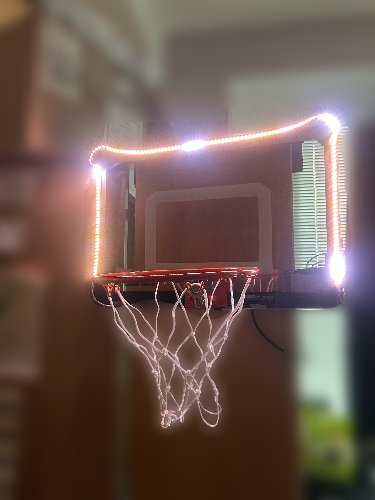
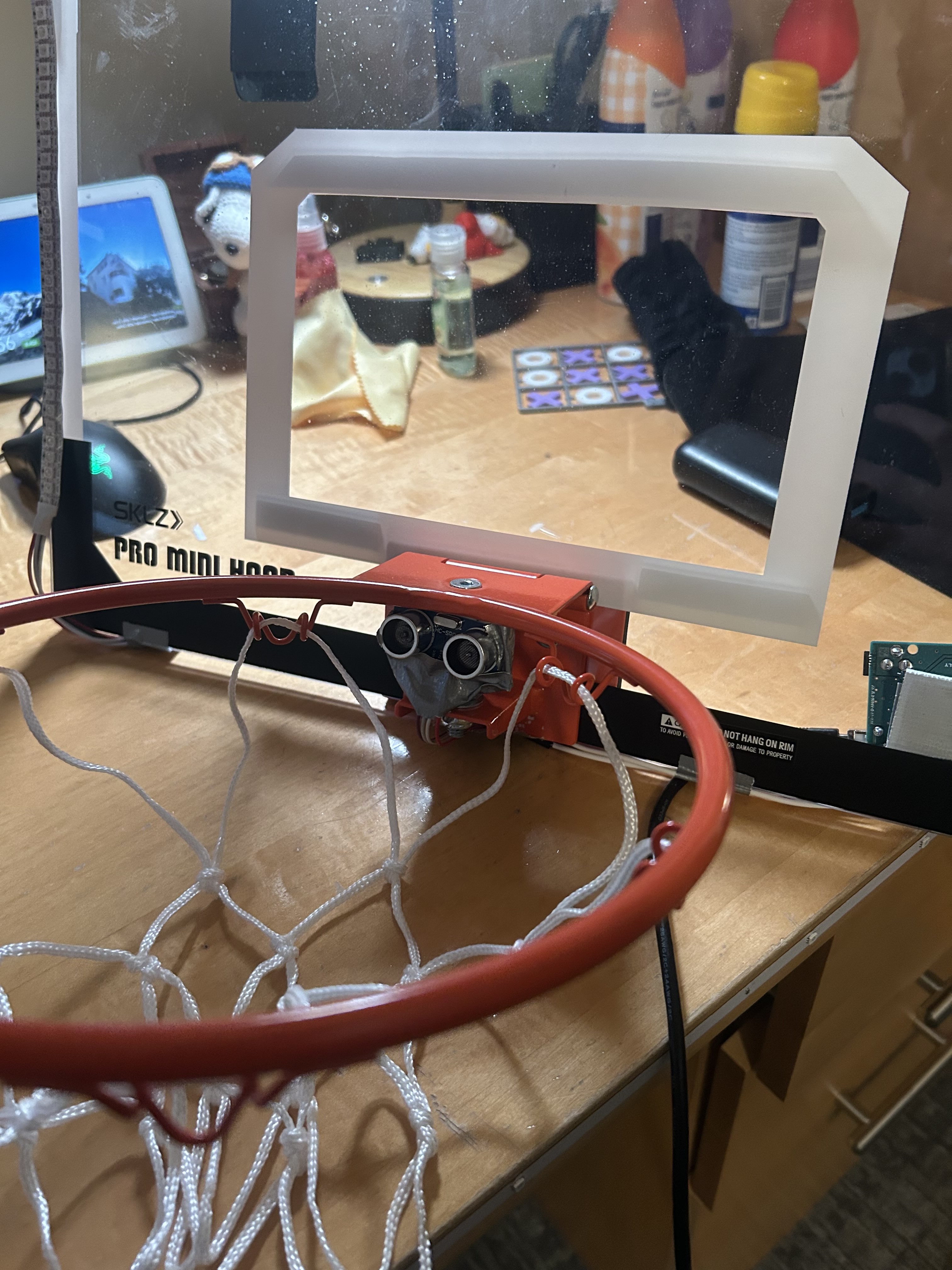
I designed and built an interactive mini basketball hoop system using Arduino technology that provides real-time feedback for successful shots. The system employs an ultrasonic sensor to detect ball passage through the hoop, triggering synchronized LED animations and audio feedback.
The implementation involved full-stack embedded development using C++ in the Arduino IDE, with emphasis on efficient state management and responsive sensor data processing. Key technical aspects include integration of the FastLED library for dynamic lighting effects, interrupt-driven audio generation, and precision timing controls for reliable detection.
During standby periods, the system runs custom-programmed ambient light patterns to maintain visual engagement. This project demonstrates practical application of embedded systems design, sensor integration, and user experience engineering to transform a standard object into an interactive, technology-enhanced product.
Project Gallery
The Challenge
Creating a reliable shot detection system required precise sensor positioning and filtering to avoid false positives from near-misses or hand movements. The LED animations needed to be synchronized with audio feedback while maintaining smooth visual effects.
The Solution
Implemented a multi-stage detection algorithm with distance thresholds and timing windows to ensure accurate shot detection. Used the FastLED library for non-blocking animations and interrupt-driven audio to maintain responsive feedback without sacrificing LED smoothness.
Technical Implementation
Hardware Components
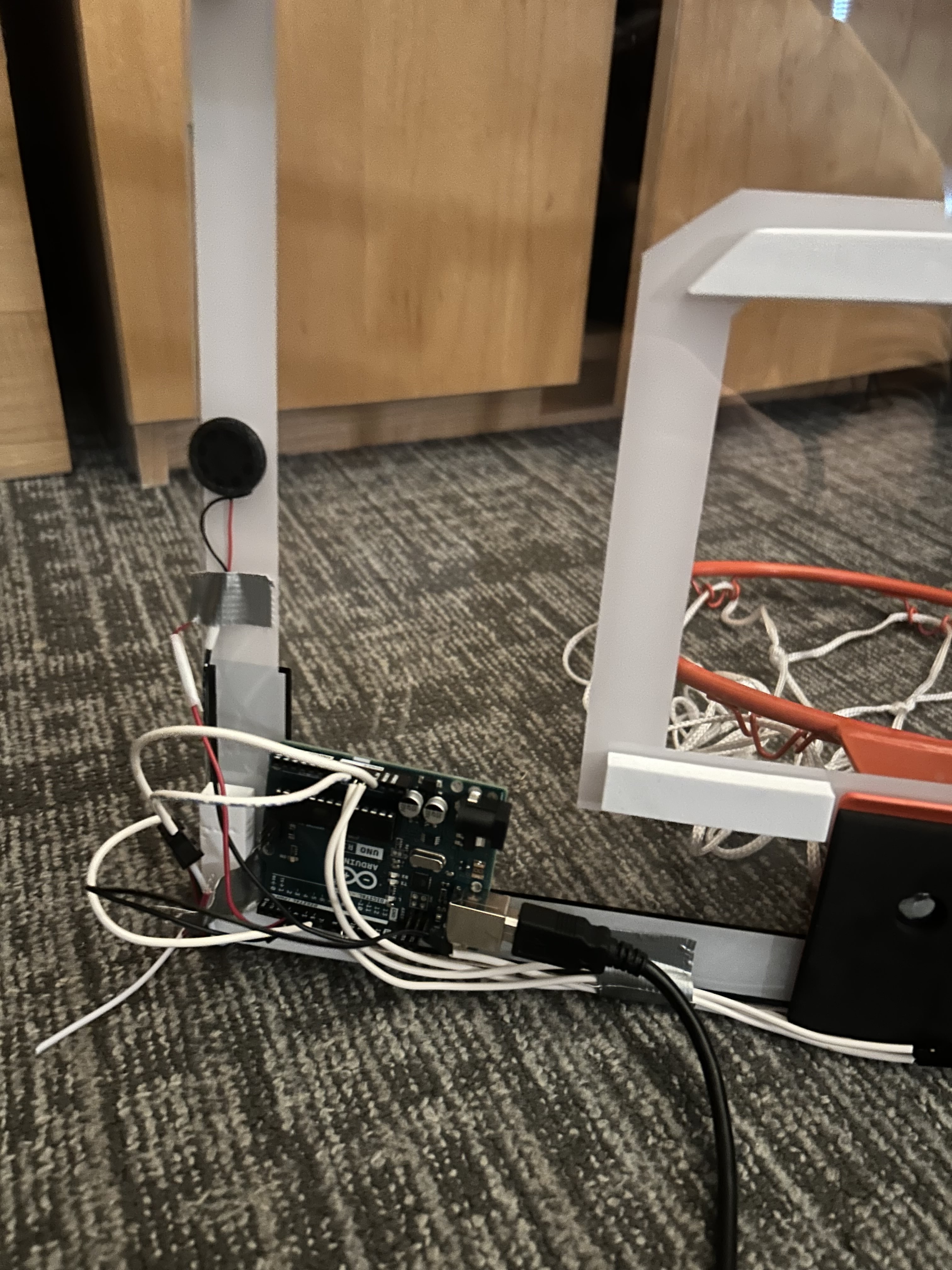
- Arduino Uno microcontroller
- Ultrasonic distance sensor
- WS2812B LED strip
- Piezo buzzer
- 5V power supply
Software Features
- Real-time shot detection
- Dynamic LED animations
- Audio feedback system
- Ambient lighting modes
Key Challenges
- False positive filtering
- Power management
- Timing synchronization
- Sensor calibration
Technologies Used
- C++ (Arduino)
- FastLED library
- Interrupt programming
- State machine design
Design & Development
The project began with prototyping the sensor placement to find the optimal position for reliable ball detection. I experimented with different mounting angles and distances to minimize false positives while ensuring all successful shots were captured.
The software development focused on creating a responsive system that could handle multiple events simultaneously - reading sensor data, updating LED animations, and generating audio feedback - all without blocking or lag. This required careful use of non-blocking code patterns and efficient state management.
The LED animation system was designed to be modular, allowing easy addition of new celebration patterns. I created several different animation modes for successful shots, including rainbow waves, sparkles, and color chases, each timed to complement the audio feedback.
Key Learnings
This project deepened my understanding of embedded systems programming, particularly the challenges of real-time responsiveness and resource constraints. I learned valuable techniques for sensor data filtering and the importance of robust error handling in physical computing applications.
Working with the FastLED library taught me about efficient graphics rendering on microcontrollers and the trade-offs between visual complexity and performance. The experience also reinforced the importance of user testing - early prototypes had detection issues that only became apparent through actual gameplay.