AI / ML · In progress
AI Fridge Camera
A computer-vision system that auto-logs what enters and leaves your fridge, tracks freshness, and suggests recipes before food expires — full-stack AI on a Raspberry Pi.
- Year
- 2024
- Role
- Solo build
- Stack
- Python, OpenAI Vision, OpenCV, Raspberry Pi, Flask, SQLite
Overview
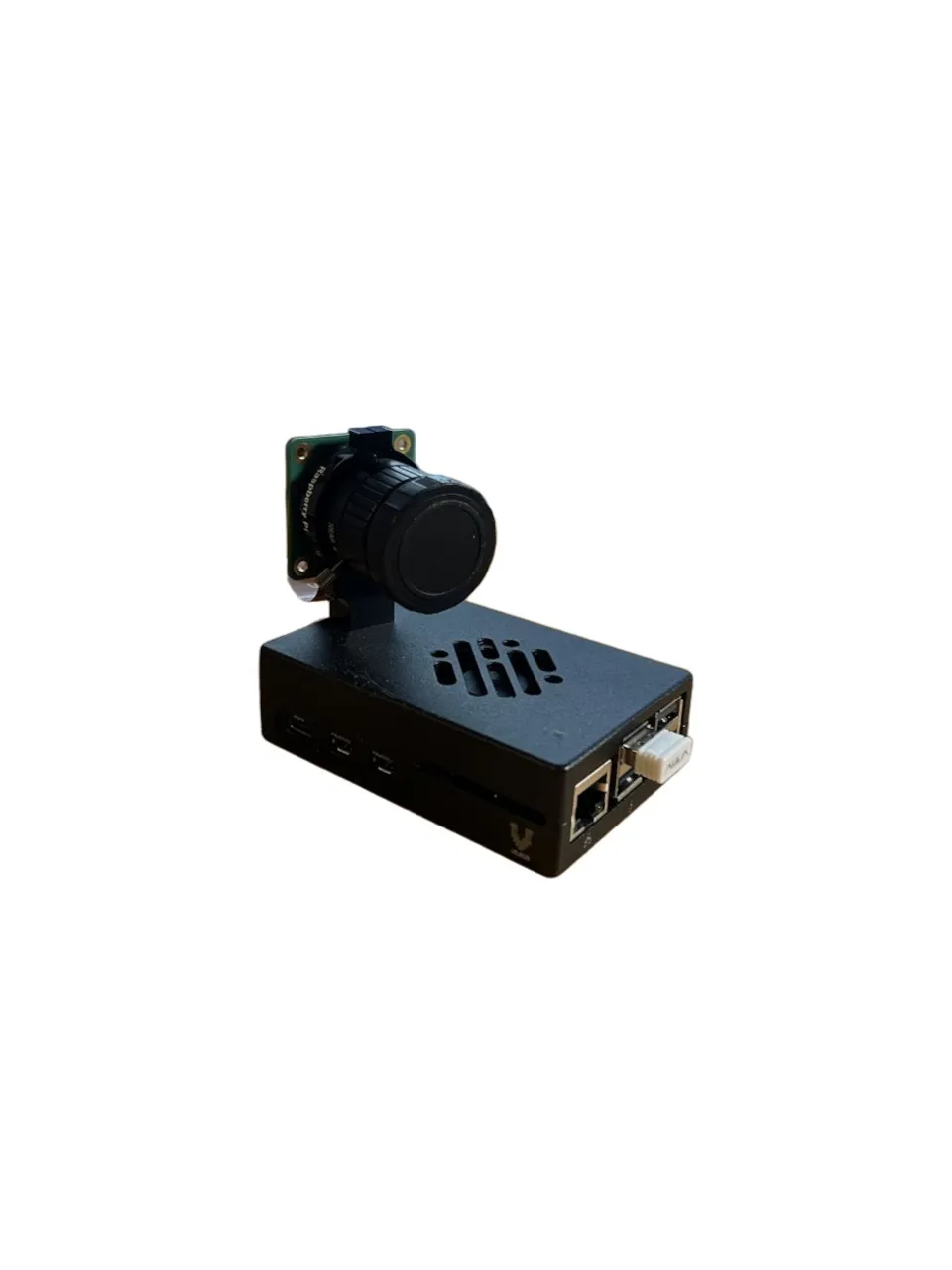
The AI Fridge Camera is an end-to-end system that fights household food waste. A camera watches the fridge door; computer vision identifies items as they go in and come out; and a freshness model tracks shelf life and surfaces recipes that prioritize ingredients about to expire. It’s a single project that spans hardware, vision, a backend, and a UI — exactly the full-stack-AI loop I enjoy.
The problem
People forget what’s in their fridge. The result is expired food, wasted money, and a surprising amount of avoidable carbon. Manual inventory tracking is tedious and nobody keeps it up.
Approach
- Capture — a Raspberry Pi camera triggers on motion at the fridge door.
- Perceive — frames go to OpenAI’s vision API for real-time item classification, with OpenCV handling pre-processing and framing.
- Track — items land in a SQLite inventory with entry timestamps; a freshness heuristic estimates remaining shelf life per item.
- Act — a Flask web app shows current inventory and recommends recipes that use what’s expiring soonest.
Outcome
The system targets up to a 30% reduction in household food waste by closing the loop between “what do I have” and “what should I cook.” It’s an ongoing build — I’m tightening classification reliability under real fridge lighting and balancing vision-API accuracy against per-call cost.
What I learned
Reliable computer vision in the wild is mostly about the unglamorous parts: lighting, framing, and graceful handling of the cases the model gets wrong. Designing around API cost — when to call the model, when to cache, when a cheaper heuristic is good enough — turned out to be as important as the model itself.